 |
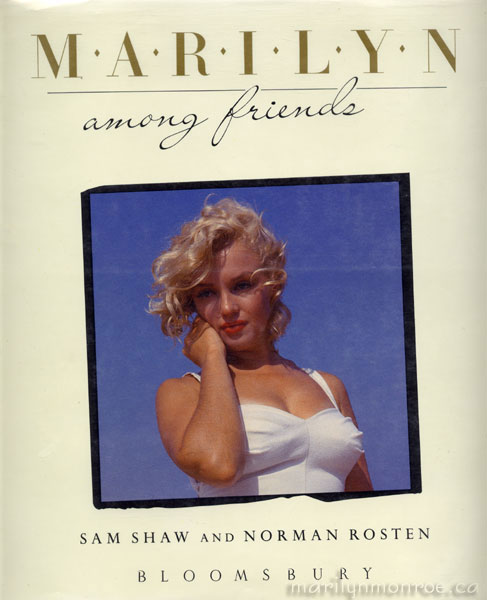
Sam Shaw took some of the most beautiful photos of Marilyn ever. This was a happy time in her life. The photos in this book span her marriage to Joe DiMaggio and Arthur Miller. The difference between this book and Shaw's other title "The Joy Of Marilyn" is the use of colour. Although, most of the photos in the book are black and white we get to see some awesome colour shots of Marilyn frolicking on the beach. The text in the book is by Norman Rosten. You can tell Rosten was a poet by the way he writes. It is beautiful to read. You are left with a feeling that both of these men truly cared for Marilyn. The memories they have of Marilyn really give us a glimpse of what she was like as a person. I especially love the story of her basset hound and how she would worry about him. This is one of my top 5 favourite Marilyn books because it is the perfect combination of photos and honest storytelling. |
||||||||||||||||||
|
|||||||||||||||||||
| |||||||||||||||||||
|
BOOK REVIEW BY DAVID MARSHALL The title of the book pretty well sums
up its contents. This is not a book by a ìbest friendî that suddenly
appeared after Marilynís death. It is not a book by a former maid who had a
rough time communicating with Marilyn as she barely spoke English. Nor is it a
book of compiled ìmemoriesî of ìbest friendsî and ìformer husbandsî
taken as truth and passed off as such by a writer who had never met his subject.
In fact, not many of the various authors who have published books on Marilyn can
lay claim to the title of ìFriendî, something both Norman Rosten and Sam
Shaw can do without any of their readers ever once wondering if this is just
more hyperbole for a bookís promotion. Shaw met Marilyn on the set of
ìViva Zapataî where he had come to take photos of the man who would become
another friend of Marilynís, Marlon Brando, and Marilynís current romantic
interest, director Elia Kazan. Within three years Shaw would take some of the
most famous pictures ever taken of her, photos that would eventually achieve
iconic status and symbolize the magic of Hollywood internationally, the simple
photos of a giggling Marilyn holding down the skirt of her pleated white
halter-dress. The film would be released on Marilynís 29th
birthday, the same year Shaw would introduce Marilyn to another friend of his,
poet Norman Rosten. Both men would become a solid part of Marilynís world and
like all friends, would keep hold of that friendship through good times and bad,
seeing her through divorce, bad press, worldwide acclaim and the quiet, late
night phone calls when she would reach out to both for a moment of reassurance. I have to admit up front that
ìMarilyn Among Friendsî has become one of my favorites. Foolishly, I put off
buying it for far too long. It was only this last summer when I chanced upon it
in a used bookstore that I finally read it. I would hope that none of you makes
the same mistake as this, like Rostenís ìUntold Storyî, brings forward the
Marilyn you felt was there, struggling to filter through the lyrical nonsense of
Mailer, the reverence of Guiles and the salacious exposes of both Summers and
Wolfe. Susan Strasbergís book comes close to explaining or at least allowing
us to see the Marilyn we felt in our hearts was behind the ramblings of the
various biographers but Rosten and Shaw are able to present this woman so
clearly because they did not have the extra baggage of seeing her through the
eyes of a shunted aside ìotherî daughter. In Shaw and Rostenís book,
Marilyn stands free of both the over-done gushing of some and the downright
nastiness of others who have tried to bring her to life through print. Rosten writes at the very end of
the book that in ìthose years, people, friends, were closer. There was more
meaning to friendship.î It may very well be true. I can remember parties my
parents hosted in those years, summer backyard barbeques where my sister and I
would watch with envy as my parents sat out on the lawn chairs laughing until
theyíd choke, highballs and cigarettes in hand while the coals would cool and
the summer twilight came on. I thought I would grow up to have friends like
that, the ones my parents would refer to as ìcompanyî, as in ìbe on your
best behavior as companyís comingî. Thatís not to say that I donít have
friends, special individuals and couples who mean the world to me but I think
Rosten is right. Shawís photo of Marilyn and Hedda, strolling hand in hand
with Patricia Rosten and Edie Shaw brings that era startling
back to mind. It was a special time of closeness, where women met for
mid-morning coffee klatches and the kids played in the yard, an era of
confidences exchanged over coffee and cigarettes. An era and a brief period
where even Marilyn Monroe could kick back and laugh with the girls and feel, for
an even briefer period, that her life had reached an even keel balanced between
new newfound creative freedom and the normality of friends, a loving husband and
the exquisite banality of planning barbeques and weekend boating trips. The icing on the cake of course,
are the many wonderful Shaw photographs presenting Marilyn during what was
likely the happiest times of her life. That we have seen the majority of them
lessens their worth not a bit. Itís all here: the candids from the set of
Seven Year Itch, the SYI party hosted by Billy Wilder at Romanoffís, Marilyn
shopping for Arthur, rowing a small boat in Central Park, and then that
wonderful session with Mr. and Mrs. Miller on the grounds of their Connecticut
farm which cumulated in the gentle picture of Marilyn as wood nymph hugging a
tree presaging Roslynís nature dance in The Misfits. As much as I love
collecting photos of Marilyn via the Internet, there is a completely different
satisfaction in being able to hold those photos in your hands, to pour over them
by turning a page rather than clicking with a mouse. The book takes us from Marilynís
escape from Hollywood in what would be a seminal year for her, 1955, to
Rostenís dimming memories of her death. The majority of that time span would
be considered ìThe Miller Yearsî yet Joe DiMaggio makes more than one
appearance. But the focus is on Marilyn, a woman unique not only in her talents
and generous spirit but in her ability to linger on in the memories of friends
for so many years. ìMarilyn Among Friendsî allows us into that tight circle
of friends and provides the reader with a closer approximation of what she was
ìreallyî like. Shaw and Rosten should know and by the end of this simple
volume the reader feels as if they too had had the joy of spending an idyllic
afternoon in her company. |
|||||||||||||||||||
